
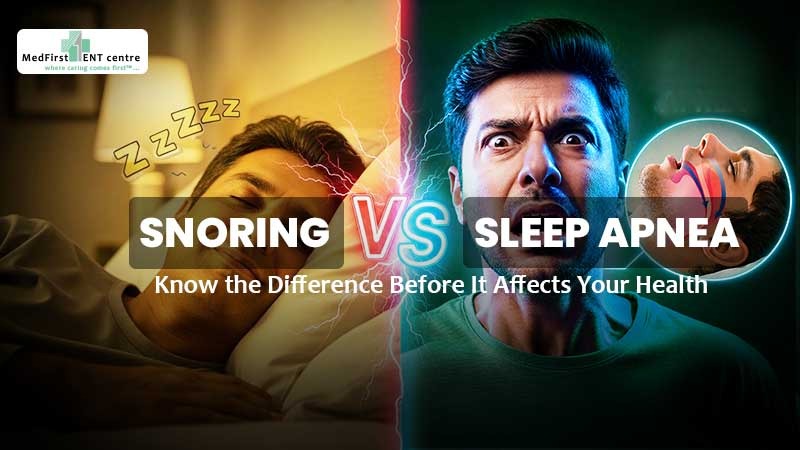
Snoring is often dismissed as a harmless habit, but in many cases, it can be a warning sign of a more serious condition called sleep apnoea. While occasional snoring may not be a concern, chronic loud snoring combined with breathing pauses during sleep should never be ignored.
Understanding the difference between snoring and sleep apnoea is crucial for early diagnosis and effective treatment. In this blog, we’ll break down the key differences, symptoms, causes, and the most effective Snoring apnoea treatment options, including advanced snoring & sleep apnoea surgery.
What is Snoring and What is Sleep Apnea?
Snoring occurs when airflow through the nose and throat is partially blocked during sleep. This blockage causes surrounding tissues to vibrate, producing the familiar snoring sound. It is quite common and can affect people of all ages.
Sleep apnoea, on the other hand, is a serious sleep disorder where breathing repeatedly stops and starts during sleep. The most common type is Obstructive Sleep Apnoea (OSA), where throat muscles relax excessively and block the airway.
Key Difference:
- Snoring = Noise due to partial blockage
- Sleep Apnoea = Repeated breathing interruptions (potentially dangerous)
While all sleep apnoea patients snore, not all snorers have sleep apnoea. That’s why we need to understand the difference.
Causes of Snoring and Sleep Apnea
Both snoring and sleep apnoea are linked to airway obstruction, but the severity and underlying causes can differ.
Common Causes of Snoring:
- Nasal congestion or sinus problems, nasal polyps
- Deviated nasal septum
- Enlarged tonsils or adenoids
- Obesity
- Alcohol consumption before sleep
- Sleeping on the back
Causes of Sleep Apnea:
- Severe airway obstruction during sleep
- Excess weight (fat around neck area)
- Weak throat muscles
- Family history of sleep disorders
- Chronic nasal blockage
- Hormonal disorders
In urban environments like Delhi, pollution and allergies can further worsen nasal blockage, increasing the risk of both conditions.
Symptoms: How to Tell the Difference?
Many people struggle to differentiate between simple snoring and sleep apnoea. Recognizing symptoms early can help you seek the right Snoring apnoea treatment.
Symptoms of Snoring:
- Loud breathing sounds during sleep
- Dry mouth in the morning
- Mild daytime tiredness
- Occasional sleep disturbance
Symptoms of Sleep Apnea:
- Loud, chronic snoring
- Pauses in breathing during sleep (noticed by others)
- Gasping or choking at night
- Excessive daytime sleepiness
- Morning headaches
- Difficulty concentrating
- Irritability or mood changes
If you or your partner notice breathing pauses or gasping, it is a strong indicator of sleep apnoea and requires immediate medical attention.
Why Sleep Apnoea is Dangerous if Ignored
Unlike simple snoring, untreated sleep apnoea can have serious health consequences. The repeated interruptions in breathing reduce oxygen levels in the body, putting stress on vital organs.
Potential Complications:
- High blood pressure
- Heart disease
- Stroke risk
- Diabetes
- Poor memory and concentration
- Increased risk of accidents due to daytime sleepiness
Sleep apnoea doesn’t just affect your sleep—it impacts your overall health and quality of life.
Snoring Apnoea Treatment Options
The right Snoring apnoea treatment depends on the severity of the condition. A proper diagnosis, usually through a sleep study, is essential before starting treatment.
- Lifestyle Changes
For mild cases, simple lifestyle modifications can help:
- Weight loss
- Avoid alcohol before bedtime
- Sleep on your side
- Maintain a regular sleep schedule
These changes can reduce snoring and improve mild apnoea symptoms.
- Medical Devices
Doctors may recommend:
- CPAP (Continuous Positive Airway Pressure) machine
- Oral appliances to keep airway open
These devices are effective, especially for moderate to severe sleep apnoea.
- Medications
While medications are not a primary cure, they can help manage underlying conditions like:
- Allergies
- Nasal congestion
- Sinus infections
- Snoring & Sleep Apnea Surgery
When other treatments fail, snoring & sleep apnoea surgery may be recommended. Surgical options aim to remove or reduce airway obstruction.
Common Surgical Procedures:
- Septoplasty (correcting deviated septum)
- Nasal polypectomy or Endoscopic Sinus Surgery
- Tonsillectomy (removal of tonsils)
- Uvulopalatopharyngoplasty (UPPP)
- Laser-assisted procedures
- Radiofrequency tissue reduction
Benefits of Surgery:
- Permanent improvement in breathing
- Reduced or eliminated snoring
- Better sleep quality
- Improved overall health
Advanced ENT centers in India offer minimally invasive techniques with faster recovery and high success rates.
When Should You See a Doctor?
Many people ignore snoring until it becomes severe. However, early consultation can prevent complications.
Consult a specialist if:
- Snoring is loud and persistent
- You feel tired even after full sleep
- Breathing pauses are noticed
- You experience choking during sleep
- Lifestyle changes are not helping
An ENT specialist can evaluate your condition and suggest the most effective Snoring apnoea treatment plan.
Diagnosis: How Sleep Apnoea is Confirmed
To accurately diagnose sleep apnoea, doctors may recommend:
- Sleep study (Polysomnography)
- Home sleep apnoea testing
- Nasal and throat examination
- Imaging tests if required
These tests help determine the severity and guide the right treatment approach.
Prevention Tips for Better Sleep Health
Preventing snoring and sleep apnoea is possible with consistent habits:
- Maintain a healthy weight
- Avoid smoking and alcohol
- Treat nasal allergies early
- Keep your sleeping environment clean
- Practice good sleep hygiene
Small lifestyle changes can make a big difference in your sleep quality.
Why Choose Expert Care for Snoring & Sleep Apnea?
Proper diagnosis and treatment require expertise. Choosing an experienced ENT specialist ensures:
- Accurate evaluation
- Personalized treatment plan
- Access to advanced surgical options
- Long-term relief and follow-up care
If you are considering snoring & sleep apnoea surgery, consulting a skilled doctor can significantly improve outcomes.
Conclusion
The good news is that effective Snoring apnoea treatment options are available—from lifestyle changes to advanced snoring & sleep apnoea surgery. Early diagnosis and the right treatment can help you sleep better, breathe easier, and live healthier.
FAQs
How is an apnoea episode initiated?
A sleep apnoea episode is initiated on account of gradual obstruction of the upper airway which gets pulled inwards on account of snoring and the accompanying negative pressure.
How are these repeated through the night?
Our breathing is dependant on Carbon Dioxide drive- elevation of CO2 in the body – which happens during periods of Apnoea – will cause awakening at the brain level on account of threat to existence. Once the brain causes the body to wake up the muscle tension in your upper airway increases which causes the airway to spring open. This stops the apnoea. These episodes are repeated through the night as a sequence of events which leads to multiple episodes of Obstructive Sleep Apnoea(OSA).
What surgical procedures are performed for a patient of Obstructive Sleep Apnoea?
-Simple nasal septal correction (Septoplasty)
– Turbinoplasty – reduction of nasal turbinates
– Endoscopic sinus surgery – for blockages and nasal polyps
– Adenoid removal – specially in children
– Tonsillectomy and other advanced surgical options including
– Uvulopalatopharyngoplasty
– Reduction of Base of Tongue/ Lingual Tonsils
– Hyoid bone elevation
Is there any office based procedure for Obstructive Sleep Apnoea?
Your ENT surgeon can perform a procedure called Injection Snoreplasty or reduce you soft palate or stiffen it using Radiofrequency, Laser or simple cauterization.
These procedures, though effective, may need repeat applications or further follow up procedures.

- Diagnosed with Nasal Polyps? Know Symptoms, Causes & Best Treatment Solutions in India - April 25, 2026
- Snoring vs Sleep Apnea: Key Differences, Symptoms & Best Treatment Options - April 25, 2026
- Caring For Your Child After Tonsillectomy Surgery - December 13, 2025